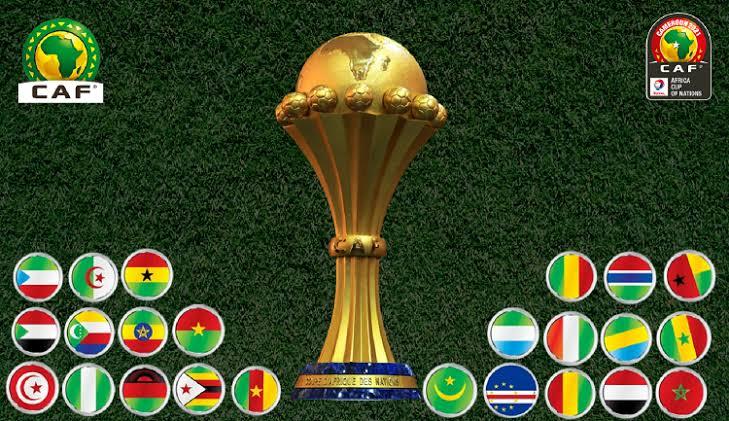
In thirty one days, three arbitrators will sit down behind closed doors in a building in Lausanne, Switzerland, and begin deciding who actually won the Africa Cup of Nations.
Not who deserved it. Not who played better. Who won it.
That sentence should not be possible. A continental final was played to its conclusion in front of a full stadium in Rabat on January 18. There was a winner on the night. There was a trophy lift. And eight months later, Africa still cannot agree on whose name goes in the record book.
What happened in Rabat
Senegal beat Morocco 1-0 after extra time at the Prince Moulay Abdellah Stadium. Pape Gueye scored the goal that won it.
The trouble came before that. With the match still goalless deep in stoppage time at the end of normal time, the referee awarded Morocco a penalty. Senegal's players did not accept it. They walked off the pitch in protest, a protest reported to have been instigated by head coach Pape Bouna Thiaw, who was later handed a lengthy ban. Some Senegalese supporters attempted to get onto the field. The match was held up for around fifteen to twenty minutes.
Then the players came back, reportedly persuaded by Sadio Mané. Brahim Díaz stepped up, attempted a panenka, and saw it saved. The final went to extra time, and Senegal won it. That is the part everybody agrees on.
What CAF did about it
On March 17, two months after the final, CAF's Appeal Board upheld a protest lodged by the Royal Moroccan Football Federation. It set aside the earlier Disciplinary Board decision, ruled that Senegal had forfeited the final under Articles 82 and 84 of the tournament regulations, recorded the result as a 3-0 win for Morocco, and declared the Atlas Lions champions.
Article 82 is the whole case. It says that a team which refuses to play or leaves the ground before the end of regulation time without the referee's permission shall be considered the loser and eliminated from the competition.
Read literally, Senegal left the field of play without permission. Read in context, they came back, the referee never abandoned anything, and the match was completed in full with a result on the board.
The reaction was immediate and continental. The Senegalese Football Federation called the ruling unfair, unprecedented and unacceptable, and elsewhere described it as a travesty with no legal basis. Senegal's government went further and called for an independent international investigation into corruption. Former Football Kenya Federation president Sam Nyamweya described it as daylight robbery and argued the interpretation of the rules was plainly wrong given the match was played to the final whistle.
Morocco's federation took the opposite view, welcoming a decision it said reaffirmed the primacy of competition regulations and the conditions needed for tournaments to be run properly.
The argument going to Lausanne
Senegal lodged its appeal with the Court of Arbitration for Sport on March 25. The federation is asking CAS to annul the CAF decision, reinstate the 1-0 result and recognise Senegal as champions.
The legal core of Senegal's case is straightforward. Under the IFAB Laws of the Game, decisions taken by the referee during a match are final and are not supposed to be rewritten administratively afterwards unless competition rules say so in clear terms. Senegal argues CAF rewrote a completed match anyway.
CAF and Morocco will argue the tournament regulations are exactly that clear, and that a rule saying a team refusing to play shall be eliminated does not carry an exception for teams that change their minds after fifteen minutes.
Why this will not end on October 8
Three things about the hearing are worth understanding before the day arrives.
It will be private. The hearing takes place behind closed doors at CAS headquarters, at the request of CAF and the Moroccan federation. No party asked for it to be public. There will be no live coverage and no transcript to read.
It will not produce a verdict that day. CAS has said explicitly that a decision will not come on the day of the hearing. A three member panel deliberates afterwards and issues a written award. In complex cases that regularly takes weeks and can take months.
And it is on a normal timetable because nobody agreed to speed it up. Neither CAF nor the Moroccan federation consented to an expedited procedure, which is why a final played in January is being heard in October.
Why it matters
Set aside which flag you fly for a moment. African football spent this summer being taken seriously in a way it rarely has been. Morocco reached the World Cup quarter finals. Senegal made the knockout rounds before losing to Belgium. The continent's players are being bought for record fees. In two weeks, forty eight nations start qualifying for a tournament three East African countries will co-host.
And underneath all of it sits an unresolved question about whether a game played on the pitch can be undone in a boardroom two months later.
Whatever CAS decides, the damage to the credibility of the last AFCON is already done, and it was not done by the players. It was done by the length of time it took, the closed doors, and the sense that the process arrived at its conclusion before it explained itself.
For those of us watching from here
The diaspora carries this one differently. In Calgary, Toronto and Montreal, Senegalese and Moroccan families live in the same neighbourhoods, shop in the same stores and send their children to the same schools. A dispute that plays out as national politics at home plays out as an awkward conversation at a birthday party here.
Most people we speak to want the same thing, which is simply an answer. Eight months of arguing has been long enough. On October 8 the process finally starts to close, and whichever way it goes, somebody's celebration from January is going to be taken away from them permanently.October 8. Lausanne. Behind closed doors.

Leave a comment
Your email address will not be published. Required fields are marked *