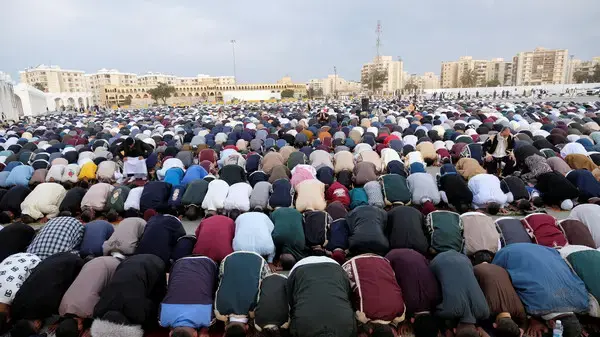
Millions of Muslims worldwide are gathering for Eid al-Fitr prayers, marking the end of the holy month of Ramadan.
From packed mosques in major cities to open prayer grounds in small communities, the day is being observed with unity, celebration, and reflection — though in some regions, the mood is more complicated.
Large Gatherings Across Cities
In many parts of the world, Eid prayers are held in large congregations, with worshippers gathering early in the morning.
Countries across the Middle East, Africa, and Asia confirmed Eid on March 20, following the sighting of the crescent moon. (Gulf News)
From Istanbul’s historic mosques to crowded prayer grounds in Nigeria and Egypt, thousands gathered shoulder to shoulder for the special Eid prayer. (CityNews Halifax)
Even in countries where Muslims are a minority — including parts of Europe — large community prayers were held in mosques, sports halls, and public squares.
Adjustments Due to Security Concerns
In some regions, Eid prayers are happening under tighter security than usual.
In the Gulf, authorities organized prayers in hundreds of mosques instead of open grounds, prioritizing safety amid rising regional tensions. (The Times of India)
This shift marks a change from the traditional large outdoor gatherings, but many worshippers still turned out in large numbers.
Worship in Difficult Conditions
While Eid is usually a time of joy, in some places, prayers are taking place under difficult circumstances.
- In Gaza, worshippers prayed among damaged buildings and rubble
- In Lebanon, many families marked Eid while displaced by conflict
- In Jerusalem, restrictions meant some people had to pray outside instead of at key religious sites (Al Jazeera)
Despite these challenges, communities still gathered, showing resilience and commitment to their faith.
A Global Moment of Unity
Across continents, the core of Eid remains the same: prayer, gratitude, and community.
After the morning prayers, families typically come together to:
- Share meals
- Visit relatives and friends
- Give charity (Zakat al-Fitr)
- Celebrate with children and community events
Even with differences in culture and circumstances, Eid continues to be one of the most unifying moments for Muslims worldwide.
Why It Matters
Eid al-Fitr prayers this year reflect both joy and reality.
While millions are celebrating in peace and happiness, others are observing the day under conflict or restrictions. Still, the global turnout shows how deeply rooted the tradition of Eid prayer is—bringing people together no matter where they are.

Leave a comment
Your email address will not be published. Required fields are marked *