
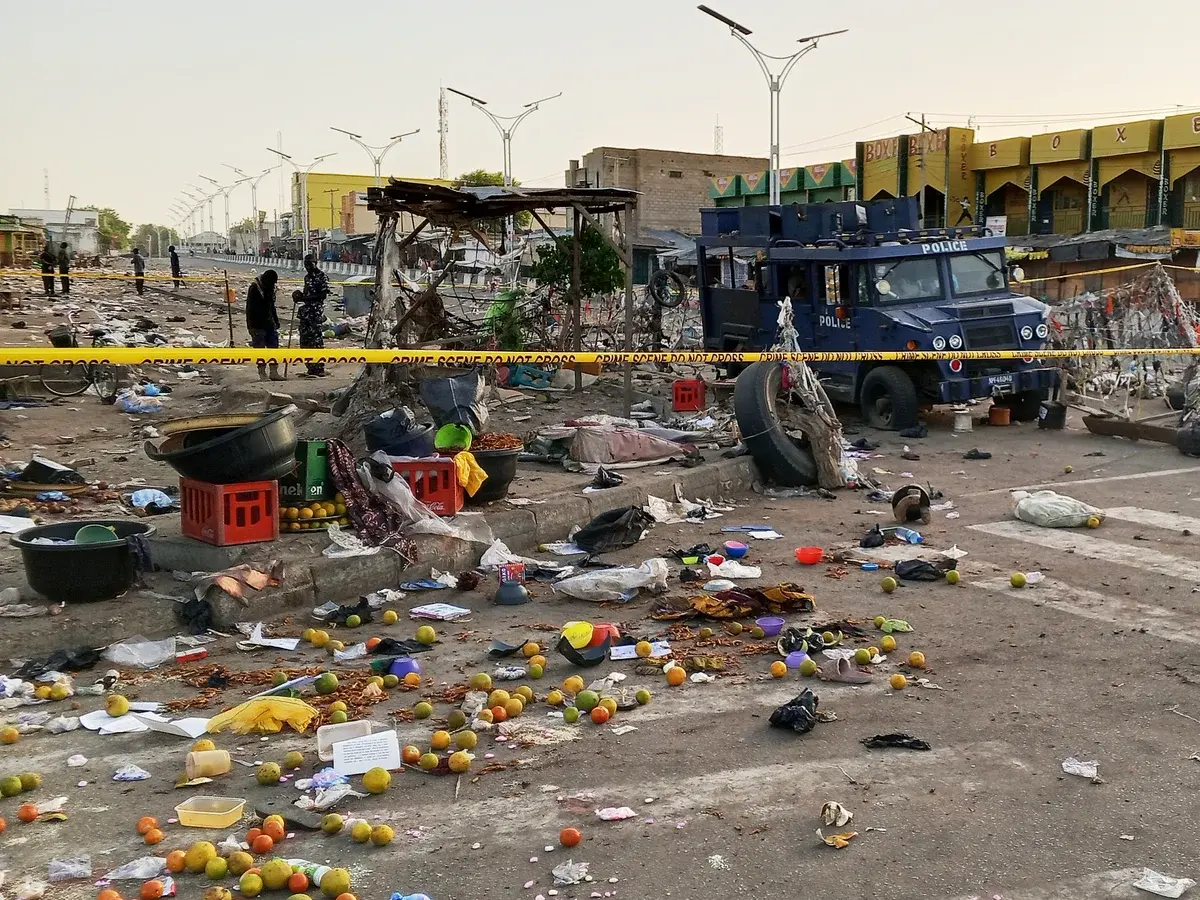
A series of deadly explosions rocked Maiduguri, northeastern Nigeria, on Monday night, leaving at least 23 people dead and more than 100 injured, according to local authorities.
The attacks mark one of the most serious incidents in the city in recent years, raising fresh concerns about a resurgence of extremist violence in the region.
Multiple Blasts Across the City
The explosions occurred in quick succession at several busy locations, including:
- A central post office
- The popular Monday Market
- The entrance of the University of Maiduguri Teaching Hospital
- A residential area in Kaleri
Witnesses described scenes of chaos, with injured victims rushed to hospitals and emergency responders struggling to manage the large number of casualties. (Reuters)
Suspected Suicide Bombings
Authorities believe suicide bombers carried out the attacks, although no group has officially claimed responsibility so far.
Security officials suspect involvement by extremist groups such as Boko Haram or the Islamic State West Africa Province (ISWAP), both of which have a long history of attacks in northeastern Nigeria. (Reuters)
The blasts came just hours after Nigerian forces reportedly repelled a militant attack on the outskirts of the city, suggesting a coordinated escalation. (AP News)
Government Response
President Bola Tinubu condemned the attacks, calling them acts of terrorism and directing top security officials to take control of the situation.
Security presence has since been increased across Maiduguri, with patrols intensified and investigations underway to identify those responsible. (Reuters)
Borno State Governor Babagana Zulum also denounced the bombings as “barbaric,” urging residents to remain calm but vigilant. (AP News)
A Region Facing Renewed Threats
Maiduguri is the epicentre of Nigeria’s long-running insurgency, which has lasted over a decade and displaced millions of people.
While the city had seen relative calm in recent years, the latest attack suggests militant groups may be regaining strength or adapting their tactics.
The bombings also took place during Ramadan, a period when large crowds gather, making attacks potentially more devastating. (The Guardian)
The Bottom Line
The Maiduguri bombings highlight ongoing security challenges in northeastern Nigeria and the continued threat posed by extremist groups.
With dozens killed and many more injured, the attack is a stark reminder that despite years of military operations, the region remains vulnerable to sudden and deadly violence.

Leave a comment
Your email address will not be published. Required fields are marked *